






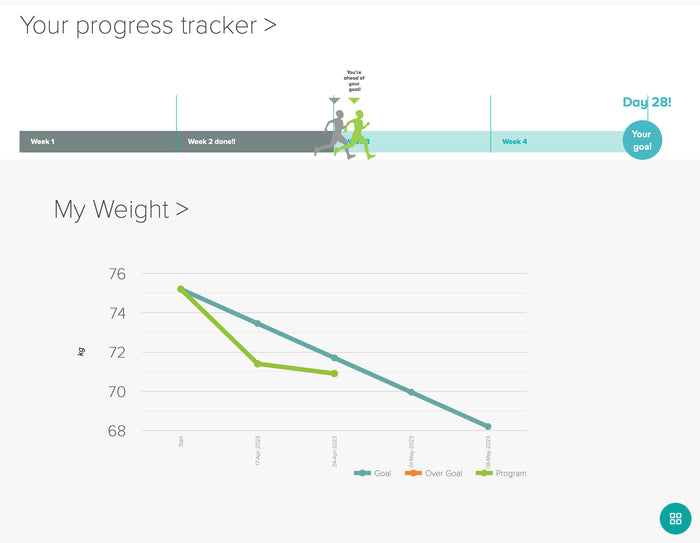



Almost everyone experiences moments of feeling disheartened during a health or fat-loss journey. It usually shows up when progress seems slower than expected - the scales don’t budge for a week, the drop in body fat feels modest, or lean mass increases come through in smaller increments than hoped. While the feeling itself is normal, it’s what we attach to it that causes the real disruption.
Feeling disheartened often signals a brief loss of trust in the process. When results aren’t fast or dramatic, old doubts surface: maybe it’s not working, maybe I’m doing something wrong, maybe my body is different. These thoughts aren’t grounded in physiology - they’re emotional responses to unmet expectations. Fat loss, metabolic repair and muscle gain are rarely linear. Slower weeks are not failures; they’re simply part of the process.
Another factor is our discomfort with delayed gratification. We live in a world built on immediacy, so when biology takes its natural course, many people interpret the slower pace as a sign the approach is flawed. In reality, meaningful change takes time. Expecting instant outcomes sets people up for unnecessary disappointment.
When someone feels disheartened, it’s also common to shift into blame mode. Instead of stepping back to assess sleep, stress, hydration, meal adherence or training consistency, people often point to age, hormones or circumstances. While these factors can play a role, they’re rarely the primary reason. This subtle drift away from personal responsibility can derail momentum.
Emotions can also cloud the bigger picture. When someone fixates on a single number that didn’t change, they ignore other markers of progress: better digestion, improved glucose control, fewer cravings, more stable energy, less joint soreness, better sleep or clothes fitting differently. These are powerful signs the body is responding, even if the scales are temporarily static.
Lastly, feeling disheartened often fuels all-or-nothing thinking. Thoughts such as what’s the point or I’ve ruined it now can trigger impulsive decisions or abandonment of the plan altogether. Ironically, it’s this thinking - not the slow week - that causes the real setback.
As they say, sometimes progress may slow, but quitting won’t speed it up!
The key is to recognise the feeling early, pause, and return to the facts. Progress compounds over time. The work you do today supports the results you’ll see in the weeks that follow. Being disheartened doesn’t mean you’re failing - it means you’re human. What matters is what you do next.