









One of the biggest challenges when working towards better health is managing expectations - particularly in the early stages.
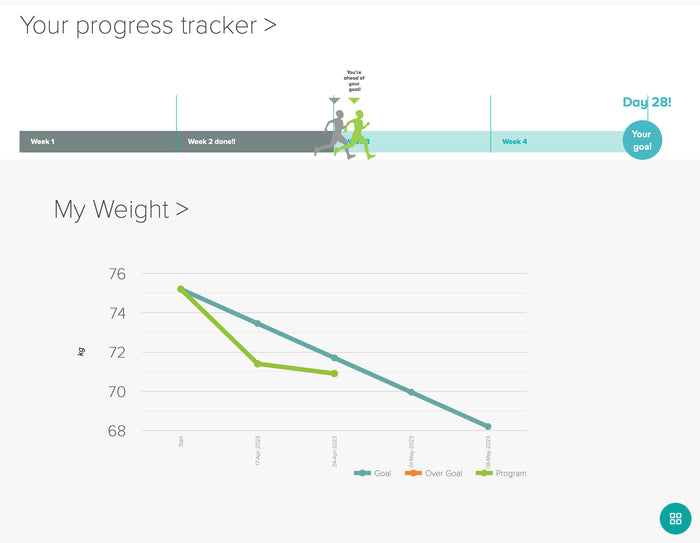
Recently, a member measured her body composition after just one week and was disappointed.
"I can't believe I've only lost 400 grams!"
But that reaction raises an important question: what did you expect your body to achieve in seven days?
If you've spent 20, 30 or 50 years developing habits that have contributed to poor metabolic health, insulin resistance, reduced muscle mass or increased body fat, it's unrealistic to expect your body to reverse all of that in a week.
It would be like walking into a gym after not training for 10 years and being disappointed that you can't perform a maximum deadlift after your first few sessions.
I'd be disappointed too if someone consistently changed their lifestyle for six or 12 months and saw very little improvement. But seven days? Your body is only just getting started.
Weight is only one piece of the puzzle
This is also why we need to stop judging progress solely by the number on the scales.
Body weight tells us nothing about what that weight is made up of. Changes in hydration, glycogen, digestive contents, muscle and body fat can all influence the number you see.
More importantly, many of the most significant improvements can be happening beneath the surface before they become obvious on the scales.
Your insulin levels may be improving. Blood glucose may be becoming more stable. Your appetite and cravings may be reducing. You may be sleeping better, feeling more energetic, improving your strength and beginning to restore metabolic flexibility.
These are not insignificant changes. They are part of the process that ultimately supports sustainable fat loss and better health.
"I may as well give up"
When progress doesn't match our expectations, it's easy to think, "Well, I may as well give up."
But what does giving up actually look like?
Returning to the habits that created the problem in the first place isn't going to get you closer to your goal. The alternative is to keep accumulating small improvements and give your body the time and consistency it needs to respond.
And remember, metabolic health isn't determined only by what you eat.
Caffeine habits, stress, sleep, meal timing, daily movement, muscle mass and strength training all influence insulin sensitivity, metabolic health and your ability to regulate body fat.
So instead of asking, "How much weight did I lose this week?", ask a better question:
"What did I do differently this week that moved my health in the right direction?"
Remember, each good habit (a workout, a balanced meal, a good nights sleep) can be viewed as a ‘deposit’ in your account, and each bad habit (eating late, snacking, unhealthy food choices, missed workouts) can be considered an account ‘withdrawal’.
How is your ‘account balance’ looking?
Progress isn't a seven-day test. It's the cumulative result of what you repeatedly do over weeks, months and ultimately years.