



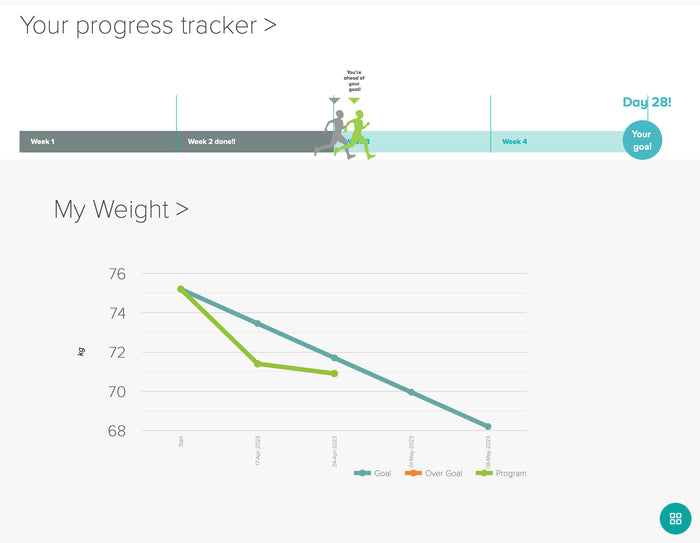



We often approach health as though it's somewhere we're trying to get to.
We set a goal weight. Commit to a 28-day program. Decide we're going to exercise five days a week. Tell ourselves that once we've lost the weight, improved our blood results or reached a certain level of fitness, we've "made it".
But authentic health doesn't really work that way.
There is no finish line where you can finally tick the health box and go back to your old habits.
Health is not a destination. It's a way of life.
And eventually, if you want the results to last, it needs to become part of your identity.
Instead of thinking, "I'm trying to eat well", it becomes, "I'm someone who prioritises nourishing my body."
Instead of "I have to exercise", it becomes, "I'm someone who moves and maintains my strength." “I get to exercise” rather and “have to”.
Instead of constantly starting, stopping and restarting, the fundamentals simply become part of how you live.
This shift in thinking is important because life will never provide perfect conditions.
There will always be obstacles.
You'll have days when you haven't prepared your meals. You'll get stuck at work and miss your usual lunch time. You'll travel. You'll eat at restaurants. You'll get sick. You'll hurt yourself and be unable to exercise. There'll be birthdays, holidays, stressful weeks, disrupted sleep and unexpected events.
If your healthy lifestyle only works when everything goes according to plan, it's going to be very difficult to sustain.
The real skill is learning how to navigate the imperfect days.
When life gets in the way
If you're unprepared, simplify.
A healthy meal doesn't need to involve an elaborate recipe. Eggs, a supermarket BBQ chicken, tinned fish, frozen vegetables or a quick RX smoothie can get you out of trouble. Keep a few reliable staples available so that being busy doesn't automatically mean takeaway.
If you can't exercise, focus on what you can control.
Maintain your nutrition, prioritise protein and keep walking or moving where possible. A temporary break from structured exercise doesn't erase everything you've achieved. When you're able, simply return to training progressively.
If you're unwell, recovery becomes the priority.
Rest. Hydrate. Replace electrolytes if you're losing fluids through fever, vomiting or diarrhoea. Eat nutritious foods as your appetite allows and don't force exercise or fasting simply because it's part of your usual routine.
If you're travelling, plan ahead.
Think about where your next source of protein is coming from. Stay hydrated. Walk. Get outside into natural light when changing time zones and establish your normal meal and sleep routine as quickly as practical.
If you're dining out, don't overcomplicate it.
Choose your protein first, add vegetables or salad, be mindful of sauces, refined carbohydrates and alcohol, then enjoy the occasion. You don't need to starve yourself beforehand or punish yourself afterwards.
And if your meal timing goes completely off track?
Nothing catastrophic has happened.
Meal timing is a useful metabolic tool, but it should never become another source of anxiety. Do the best you can, then return to your usual structure at the next opportunity.
Beware the all-or-nothing trap
Perhaps the most damaging obstacle isn't travel, illness or a restaurant meal.
It's the thought:
"I've blown it now, so I may as well start again Monday."
One imperfect meal doesn't need to become an imperfect day. One difficult day doesn't need to become a difficult week.
There is an enormous difference between flexibility and giving up.
When circumstances aren't ideal, ask yourself a very simple question:
"What's the best choice available to me right now?"
Maybe that's choosing the steak and vegetables at the pub.
Maybe it's having a quick RX smoothie rather than ordering pizza.
Maybe it's walking for 20 minutes because you can't get to the gym.
Maybe it's going to bed early because you're exhausted.
Sometimes the healthiest decision is simply the best decision available under the circumstances.
Create your non-negotiables
When everything goes wrong at once, come back to the fundamentals.
Aim for structured meals rather than grazing. Prioritise protein. Choose whole foods wherever possible. Drink plenty of water. Maintain your overnight fasting window when practical. Walk. Protect your sleep. Then return to your usual routine as soon as you can.
These are your anchors.
The purpose of a structured program isn't to teach you how to live perfectly for 28 days.
It's to give you the knowledge, skills and experience to make better decisions for the rest of your life.
Because ultimately, the goal isn't to be "on a program".
It's to become someone who values their health enough to keep returning to the behaviours that support it.
Not perfectly.
Not obsessively.
But consistently.
That's when health stops being something you're chasing and starts becoming part of who you are.